
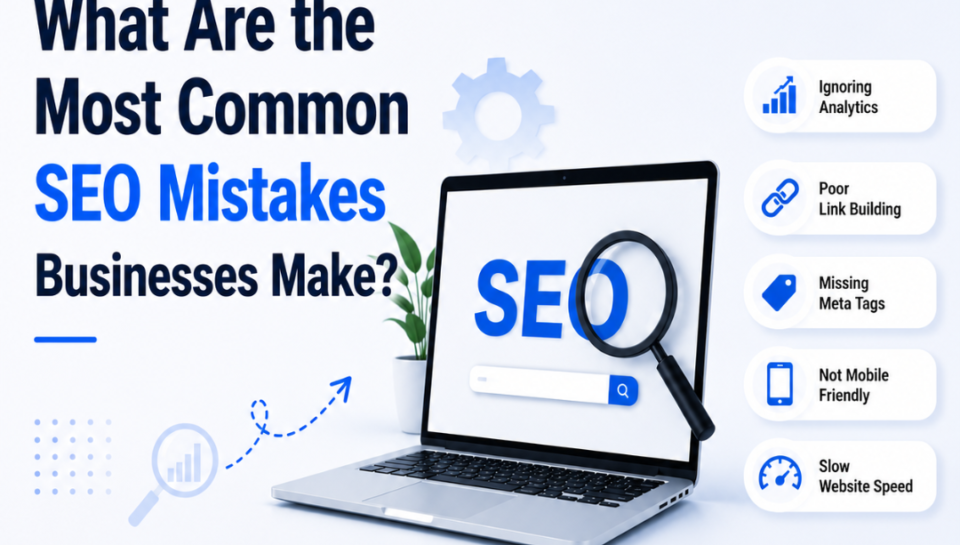
What Are the Most Common SEO Mistakes Businesses Make?
What Are the Most Common SEO Mistakes Businesses Make?
Search engine optimization (SEO) is one of the most effective digital marketing strategies for generating long-term, high-quality traffic. Yet many businesses invest time and resources into search optimization without seeing meaningful results. Often the reason isn’t the lack of effort, but, it’s making common SEO mistakes that limit visibility, reduce organic traffic, and prevent websites from ranking competitively.
From targeting the wrong keywords to overlooking technical issues, these mistakes can significantly impact your website’s performance. The good news is that most of them are preventable. By understanding what to avoid and following proven SEO best practices, businesses can improve search visibility, attract qualified visitors, and build sustainable online growth.
Why SEO Mistakes Can Hurt Your Business
SEO is more than publishing content and adding keywords. Search engines evaluate hundreds of Google ranking factors to determine which websites provide the most helpful and trustworthy experience.
When important SEO elements are ignored, businesses often experience:
- Lower search visibility.
- Declining organic traffic.
- Poor user experience.
- Reduced lead generation and conversions.
- Difficulty competing with industry leaders.
If you’ve ever asked yourself, “Why is my website not ranking?”, the answer often lies in one or more overlooked SEO issues. Identifying and fixing these problems is essential for improving your website’s long-term performance.
The Most Common SEO Mistakes Businesses Make
1. Ignoring Search Intent
One of the biggest SEO mistakes to avoid is creating content without understanding what users actually want.
Every search has an intent, whether users want information, a product, a comparison, or a solution. Content that doesn’t match this intent is less likely to rank, regardless of keyword usage.
Research the search intent behind every target keyword and create content that answers the user’s question clearly, completely, and accurately.
2. Targeting the Wrong Keywords
Many businesses focus only on high-volume keywords without considering competition or relevance. As a result, they struggle to rank or attract visitors who aren’t interested in their services.
Perform thorough keyword research and target keywords that align with your business goals. Use a combination of primary, secondary, and long-tail keywords that reflect user intent.
3. Publishing Thin or Low-Quality Content
Publishing short, repetitive, or generic content is one of the most common SEO mistakes. Search engines increasingly prioritize more content that demonstrates expertise, experience, and originality.
Create in-depth, well-structured content that solves real problems, answers common questions, and provides actionable insights. Shift to quality over quantity for real and credible results.
Example: Instead of publishing a 300-word article titled “Benefits of SEO” with a generic list of points, create a comprehensive guide such as “10 SEO Strategies That Help Small Businesses Increase Organic Traffic in 2026.”
4. Keyword Stuffing
Using the same keyword repeatedly no longer improves rankings. Instead, keyword stuffing reduces readability and can negatively affect your website’s credibility.
Use keywords naturally throughout your content while incorporating related terms, synonyms, and semantic phrases. Write for users first and optimize for search engines second.
5. Poor On-Page SEO
Many websites overlook basic on-page SEO mistakes, including poorly written title tags, missing meta descriptions, incorrect heading structures, duplicate content, and missing image alt text.
These elements help search engines understand your pages while improving click-through rates.
How to fix it:
Optimize every page with:
- Descriptive title tags
- Compelling meta descriptions
- Clear H1, H2, and H3 headings
- Optimized images with descriptive alt text
- Clean, readable URLs
6. Weak Internal Linking
Internal links help search engines discover your content and distribute authority across your website. They also improve navigation and keep visitors engaged longer.
Link relevant blog posts, service pages, and supporting resources naturally within your content to strengthen your website architecture.
You can add an internal link here.
7. Slow Website Speed and Poor Mobile Experience
Website speed and mobile usability are critical Google ranking factors. Slow-loading pages increase bounce rates and reduce user satisfaction.
With most searches happening on mobile devices, a poor mobile experience can significantly impact the ranking system.
How to fix it:
- Compress images.
- Improve Core Web Vitals.
- Minimize unnecessary scripts.
- Enable browser caching.
- Use responsive website design.
8. Ignoring Technical SEO
Even excellent content can struggle to rank if search engines cannot crawl or index your website properly.
Common technical SEO mistakes include:
- Broken links.
- Crawl errors.
- Duplicate pages.
- Missing XML sitemaps.
- Incorrect robots.txt settings.
- Indexing issues.
Perform regular technical SEO audits to identify and resolve issues before they impact rankings.
9. Neglecting Local SEO
Businesses serving specific cities or regions often miss valuable opportunities by ignoring local search optimization.
Without local SEO, potential customers may never find your business when searching nearby.
- Optimize your Google Business Profile
- Maintain consistent business information
- Encourage customer reviews
- Create location-specific landing pages where relevant
10. Failing to Monitor SEO Performance
SEO is an ongoing process not a one-time project. Without measuring results, it’s impossible to know what’s working and what needs improvement.
Monitor keyword rankings, organic traffic, user behavior, conversions, and technical health regularly. Use these insights to continuously improve your SEO strategy.
Key Takeaways
Avoiding common SEO mistakes is one of the most effective ways to improve your website’s visibility, attract qualified traffic, and achieve sustainable business growth. Success in SEO comes from understanding user intent, creating high-quality content, optimizing on-page and technical elements, and continuously monitoring your website’s performance.
Quick SEO Checklist
Follow this simple SEO audit checklist to keep your website optimized:
- Conduct keyword research before creating content.
- Match every page with the correct search intent.
- Publish useful, original, and authoritative content.
- Optimize title tags, meta descriptions, and headings.
- Strengthen internal linking across your website.
- Improve mobile usability and page speed.
- Fix crawl errors, broken links, and indexing issues.
- Implement schema markup where appropriate.
- Refresh outdated content regularly.
- Track rankings, traffic, and conversions consistently.
Why Regular SEO Audits Matter
SEO isn’t something you complete once and forget. Search engine algorithms continue to evolve. Competitors publish new content, and user behavior changes over time. A website that performed well six months ago may gradually lose visibility if it isn’t maintained.
Conducting regular SEO audits helps identify technical problems, outdated content, broken links, keyword opportunities, and user experience issues before they affect your rankings. Reviewing your website every few months ensures it continues to follow current SEO best practices and remains competitive in search results.
SEO Best Practices for Long-Term Success
Businesses that consistently rank well understand that SEO is a long-term investment rather than a quick fix. Sustainable growth comes from building authority, trust, and relevance over time.
To improve Google rankings, focus on:
- Creating people-first content that demonstrates expertise.
- Building topical authority around your core services.
- Keeping content accurate and regularly updated.
- Improving website performance and user experience.
- Following Google’s quality guidelines instead of chasing algorithm shortcuts.
These practices not only help increase organic visibility but also make your content more likely to appear in AI-generated search experiences, Featured Snippets, and People Also Ask results.
Conclusion
Avoiding common SEO mistakes is one of the most effective ways to improve your website’s visibility, attract qualified traffic, and generate sustainable business growth. Whether it’s understanding search intent, optimizing technical performance, improving on-page SEO, or publishing genuinely helpful content, every improvement strengthens your website’s ability to compete in search results.
SEO is not about finding shortcuts or quick wins. It’s an ongoing process of optimizing your website, creating valuable content, monitoring performance, and adapting to changing Google ranking factors. Businesses that invest in continuous website SEO optimization are better positioned to build authority, earn trust, and achieve long-term success in organic search.
BrainyDX helps businesses develop data-driven SEO strategies that increase rankings, attract qualified traffic, and drive sustainable growth.