
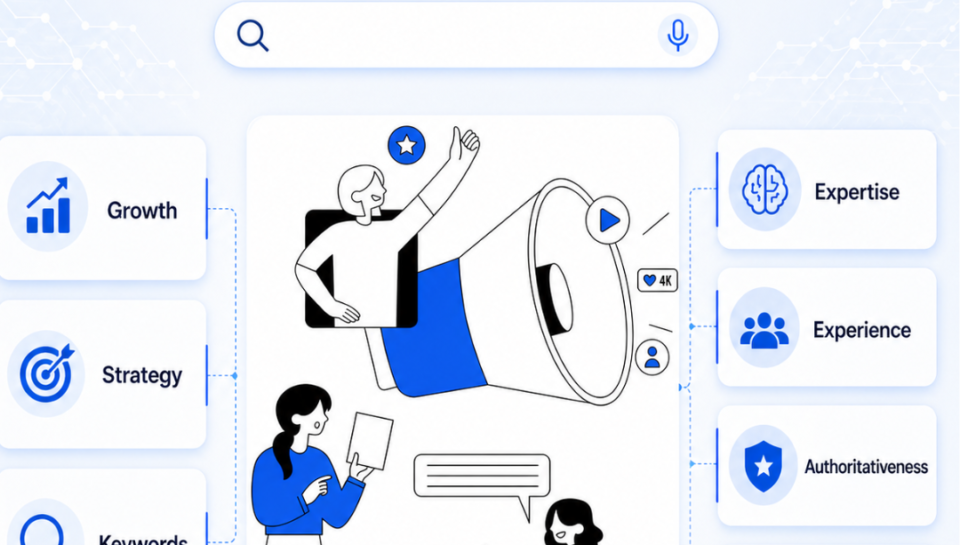
How Are Businesses Ranking in AI Search Engines?
How Are Businesses Ranking in AI Search Engines?
Search is evolving rapidly and most businesses are already falling behind. AI-powered search engines no longer rank content based on keywords alone. They evaluate meaning, intent, and real user value in ways traditional SEO never could. Today, artificial intelligence is redefining how search works, making results more personalized, conversational, and accurate.
At BrainyDX, we’ve observed a clear shift in how businesses gain visibility in AI-driven search. Traditional keyword strategies alone are no longer enough – AI systems now prioritize context, authority, and real user value when ranking content.
For businesses, this shift means that traditional SEO tactics alone are no longer enough. Understanding AI search engine ranking is critical to staying visible and competitive in this new landscape.
In this article, we’ll break down how AI search works, what influences rankings, and how businesses can adapt their strategies to thrive in the future of search engines.
This guide is based on real-world SEO and AI search optimization strategies used by BrainyDX to help brands improve their visibility in next-generation search environments.
What Are AI Search Engines?
AI search engines use advanced technologies like machine learning, natural language processing (NLP), and semantic search to deliver more relevant and context-aware results.
Unlike traditional search engines that rely heavily on keywords, AI-driven platforms focus on understanding why a user is searching.
Examples of AI Search Engines:
- Google’s Search Generative Experience (SGE)
- Bing AI (powered by large language models)
- AI-driven assistants and chat-based search tools
Key Characteristics:
- Conversational responses instead of just links
- Context-aware results based on user behavior
- Ability to process complex queries
In short, AI search engines aim to replicate human understanding – making search more intuitive and efficient.
BrainyDX Insight:
Many businesses still optimize only for keywords, but AI search engines prioritize meaning and intent. In our experience, content that answers complete user journeys performs significantly better than isolated keyword-focused pages.
How AI Search Engines Rank Content
Understanding ranking factors in AI search engines is essential for businesses aiming to improve their visibility.
1. Contextual Relevance
AI systems assess how well your content answers the meaning behind a query and not just the keywords used.
- Focus on meaning, not repetition
- Use natural language and complete answers
2. Content Depth and Authority
AI prefers comprehensive content that demonstrates expertise.
- Detailed guides perform better than short posts
- Authority signals (backlinks, mentions) matter more
At BrainyDX, we’ve found that long-form, structured content with clear topic coverage consistently outperforms shorter blogs in AI-driven rankings.
3. User Intent Matching
AI search engines prioritize content that satisfies the user’s intent.
- Informational (learning something)
- Navigational (finding a brand/page)
- Transactional (ready to buy)
Matching intent is a key driver of AI search engine ranking.
4. Semantic Search and NLP
AI uses NLP to understand relationships between words and concepts.
- Synonyms and related terms improve relevance
- Topic coverage is more important than exact keywords
5. Engagement Signals
User behavior influences rankings:
- Click-through rate (CTR)
- Time spent on page
- Bounce rate
Content that keeps users engaged is rewarded.
For example, improving content readability and structure has helped our clients increase average session duration—an important signal for AI-based ranking systems.
Key Differences Between Traditional SEO and AI SEO
The shift from traditional SEO to AI SEO is significant.
Keyword-Based SEO vs Intent-Based Optimization
Traditional SEO:
- Focus on exact keywords
- Optimize for search engine crawlers
- Rankings driven by technical signals
AI SEO:
- Focus on user intent and meaning
- Optimize for human understanding
- Rankings influenced by relevance, trust, and engagement
To optimize for AI search, businesses must think beyond keywords and focus on delivering value.
The BrainyDX AI Search Ranking Framework
At BrainyDX, we use a 4-layer approach to optimize for AI search engines:
- Intent Mapping – Understanding what the user truly wants
- Content Depth Layering – Covering topics comprehensively
- Entity Optimization – Strengthening brand and topical signals
- Engagement Signals – Improving how users interact with content
This framework helps businesses align with how AI systems evaluate and rank content.
Top Strategies to Rank in AI Search Engines
To succeed in AI search engine ranking, businesses need to adopt smarter, user-focused strategies.
1. Create High-Quality, In-Depth Content
- Cover topics comprehensively
- Answer multiple related questions
- Use clear structure (headings, bullet points)
This is a core strategy we implement at BrainyDX when building AI-optimized content ecosystems for clients.
2. Optimize for Conversational Queries
AI search is conversational. Your content should be too.
- Use question-based headings
- Write in a natural tone
- Include long-tail queries
3. Use Structured Data and Schema Markup
Structured data helps AI understand your content better.
- Add FAQ schema
- Use article and product markup
- Improve visibility in rich results
4. Build Topical Authority
Become a go-to source in your niche.
- Create content clusters
- Interlink related articles
- Maintain consistency in publishing
At BrainyDX, we build topic clusters that signal expertise to AI systems, helping brands become trusted sources in their niche.
5. Improve User Experience and Engagement
- Fast-loading pages
- Mobile-friendly design
- Clear navigation
Better UX leads to stronger engagement signals.
6. Focus on E-E-A-T
E-E-A-T stands for:
- Experience
- Expertise
- Authority
- Trust
To strengthen E-E-A-T:
- Showcase author credentials
- Add real-world insights
- Use credible sources
- Strong E-E-A-T signals help search systems trust your brand.
This is a critical factor in AI SEO strategies.
Common Mistakes to Avoid
Even with the best intentions, businesses often make mistakes that hurt their AI search engine ranking.
1. Keyword Stuffing
Overusing keywords makes content unnatural and reduces readability.
2. Thin Content
Short, shallow articles lack value and are ignored by AI systems.
3. Ignoring User Intent
If your content doesn’t solve the user’s problem, it won’t rank.
4. Lack of Authority Signals
Without credibility, even good content may struggle to rank.
Future of AI Search and SEO
The future of search engines is AI-driven, and the transformation is just beginning.
Key Trends to Watch:
- Hyper-personalized search results
- Voice and conversational search growth
- Zero-click searches increasing
- AI-generated summaries dominating SERPs
Based on current trends, BrainyDX predicts that brand authority and entity recognition will become even stronger ranking factors in AI search.
How Businesses Should Adapt:
- Focus on content quality over quantity
- Invest in brand authority
- Align content with user journeys
- Continuously update and optimize content
Businesses that embrace AI-driven changes early will gain a significant competitive advantage.
Conclusion
AI is fundamentally changing how search engines work and how businesses rank within them. Success in AI search engine ranking now depends on understanding user intent, creating valuable content, and building authority.
To stay ahead:
- Focus on relevance, not just keywords
- Deliver meaningful, in-depth content
- Optimize for human experience and AI understanding
AI search is not just changing SEO, it’s redefining how brands are discovered online.
At BrainyDX, we focus on optimizing not just for search engines, but for how AI understands, evaluates, and recommends content. By combining data-driven SEO, content depth, and brand authority, we help businesses stay visible in the evolving search landscape.
The future of search belongs to brands that adapt early—and build trust with both users and AI systems.